Mass / CoG Compliance
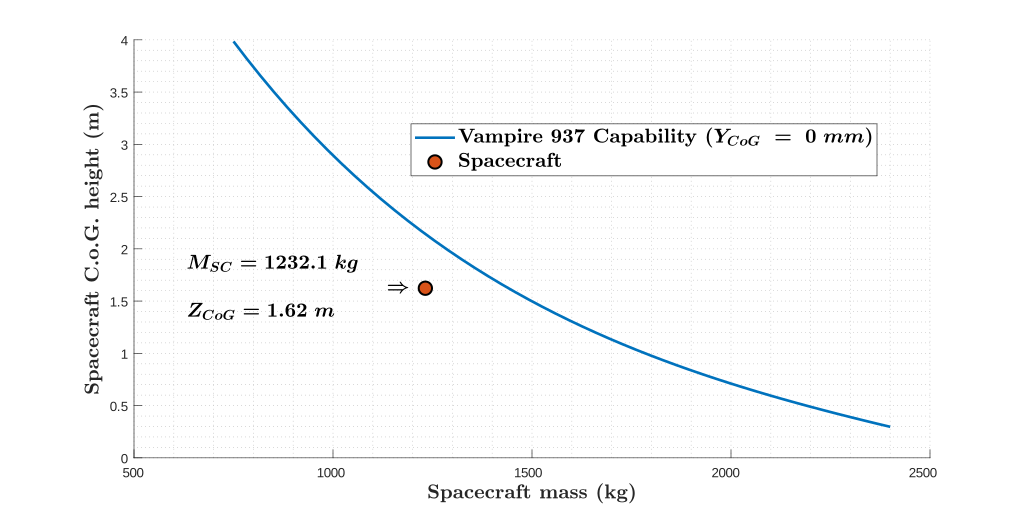
The spacecraft mass (1232 kg) and center-of-gravity height (1.62 m) were verified against the Vega-C User Manual limits. The static moment at the LV-SC interface stays below the maximum allowed value, preventing structural failure during launch. Both constraints are satisfied.
Modal Analysis
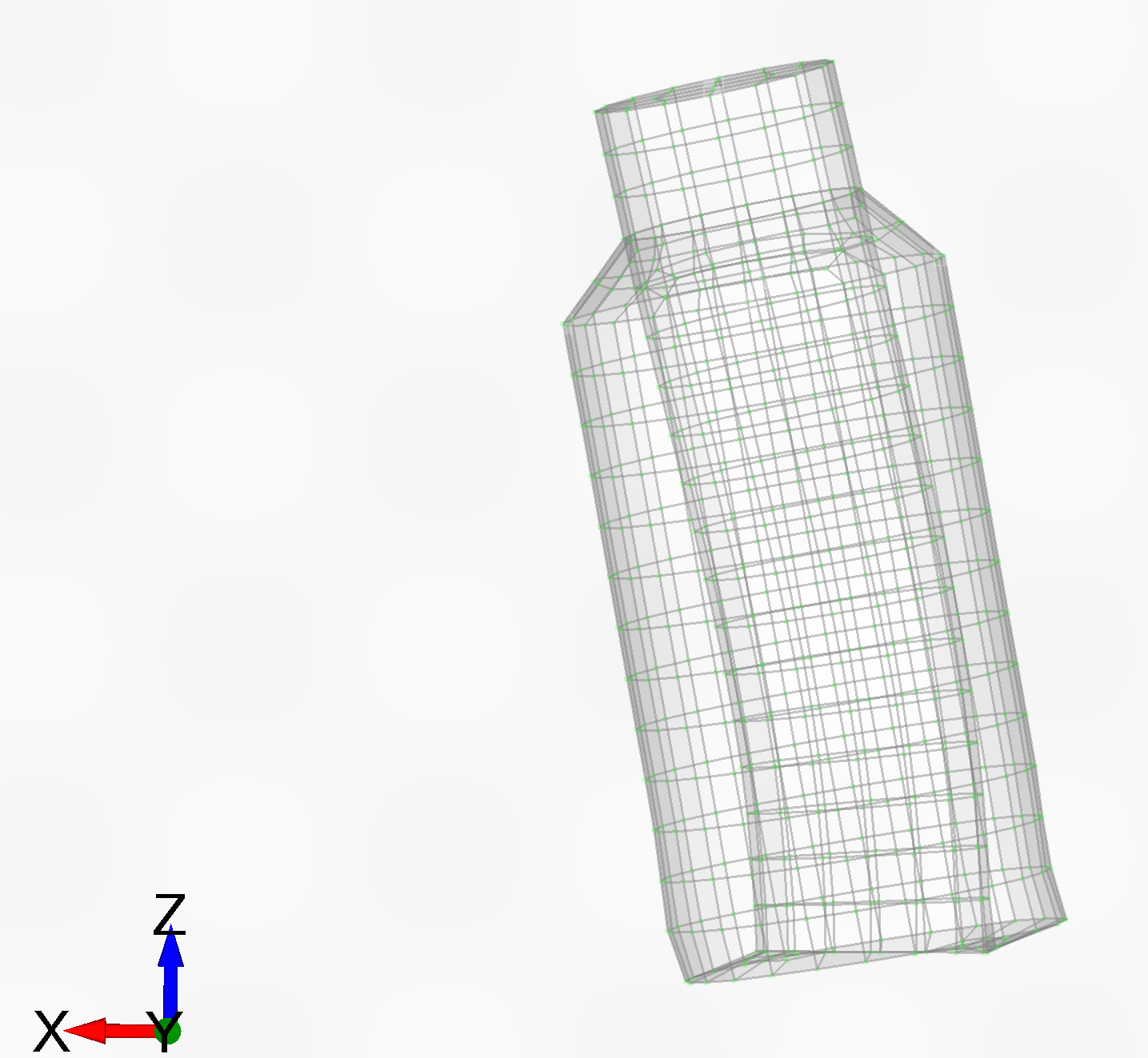
Spacecraft and launcher finite element models were tuned to meet frequency requirements (lateral > 12 Hz, longitudinal > 20 Hz). The spacecraft achieves 13.4 Hz lateral and 55.6 Hz longitudinal, both compliant. Dynamic decoupling between launcher and spacecraft is confirmed.
Static Analysis and Overfluxes
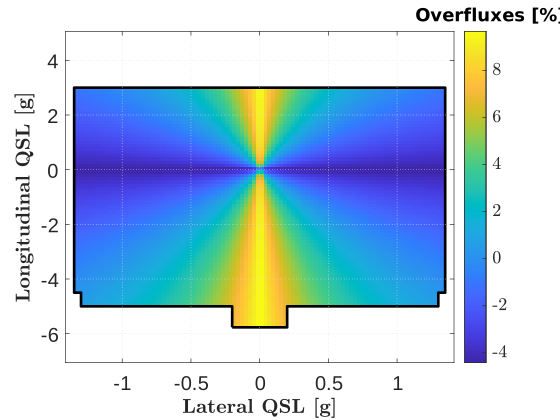
Line loads and overflux indices were computed under the flight envelope's quasi-static load combinations. Overflux peaks were identified and clamp band tension was assessed: all compliant.
Launcher / Spacecraft Dynamic Coupling
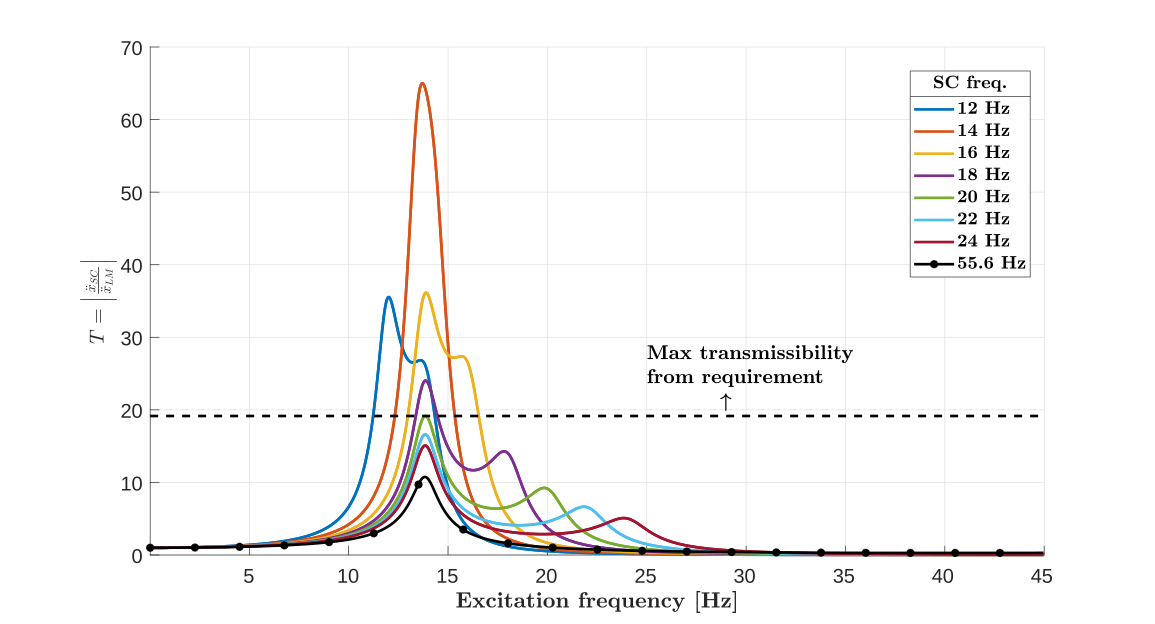
Transmissibility analysis confirmed negligible dynamic coupling between the launcher and spacecraft, validating the independent design approach.
Thermoelastic Analysis
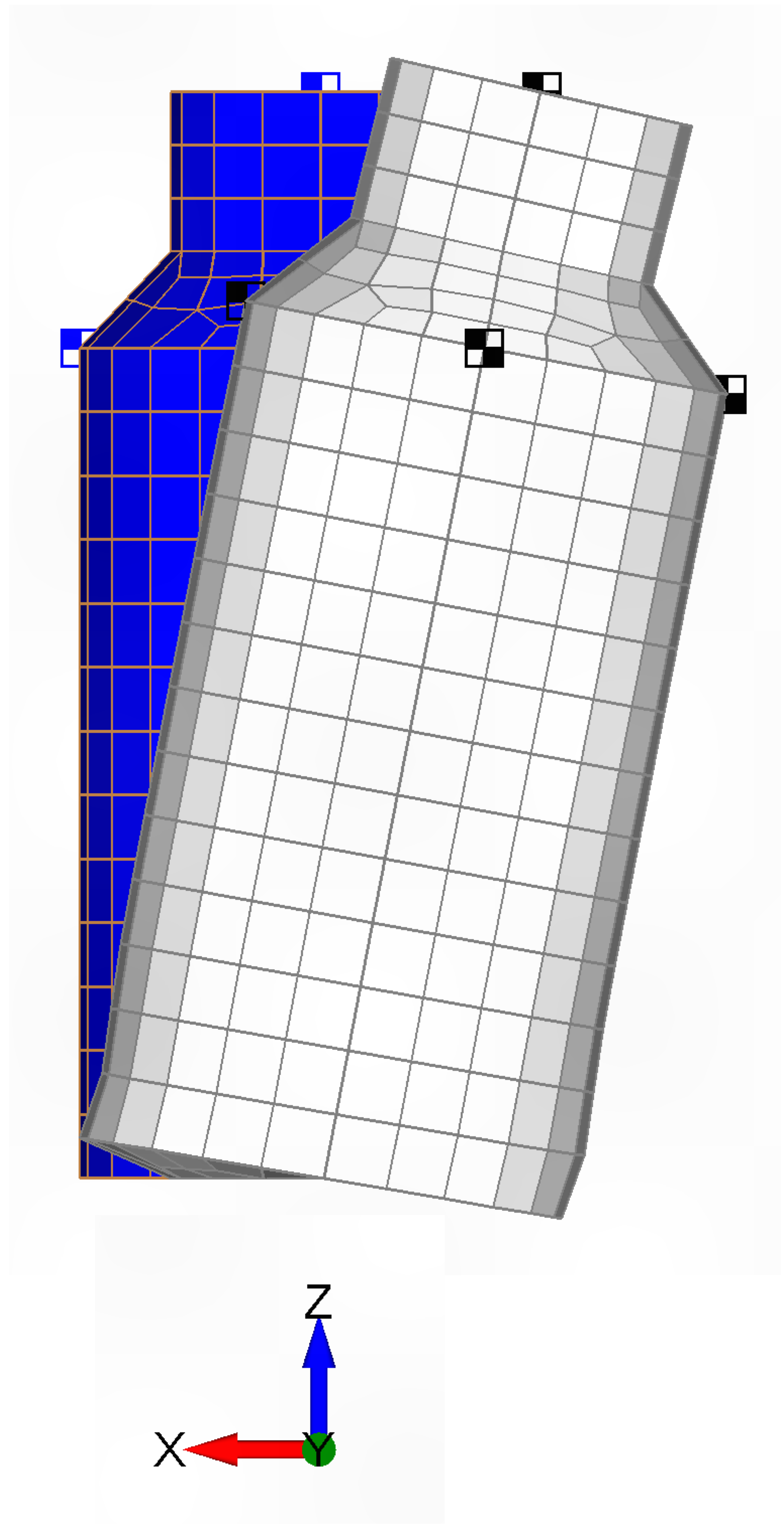
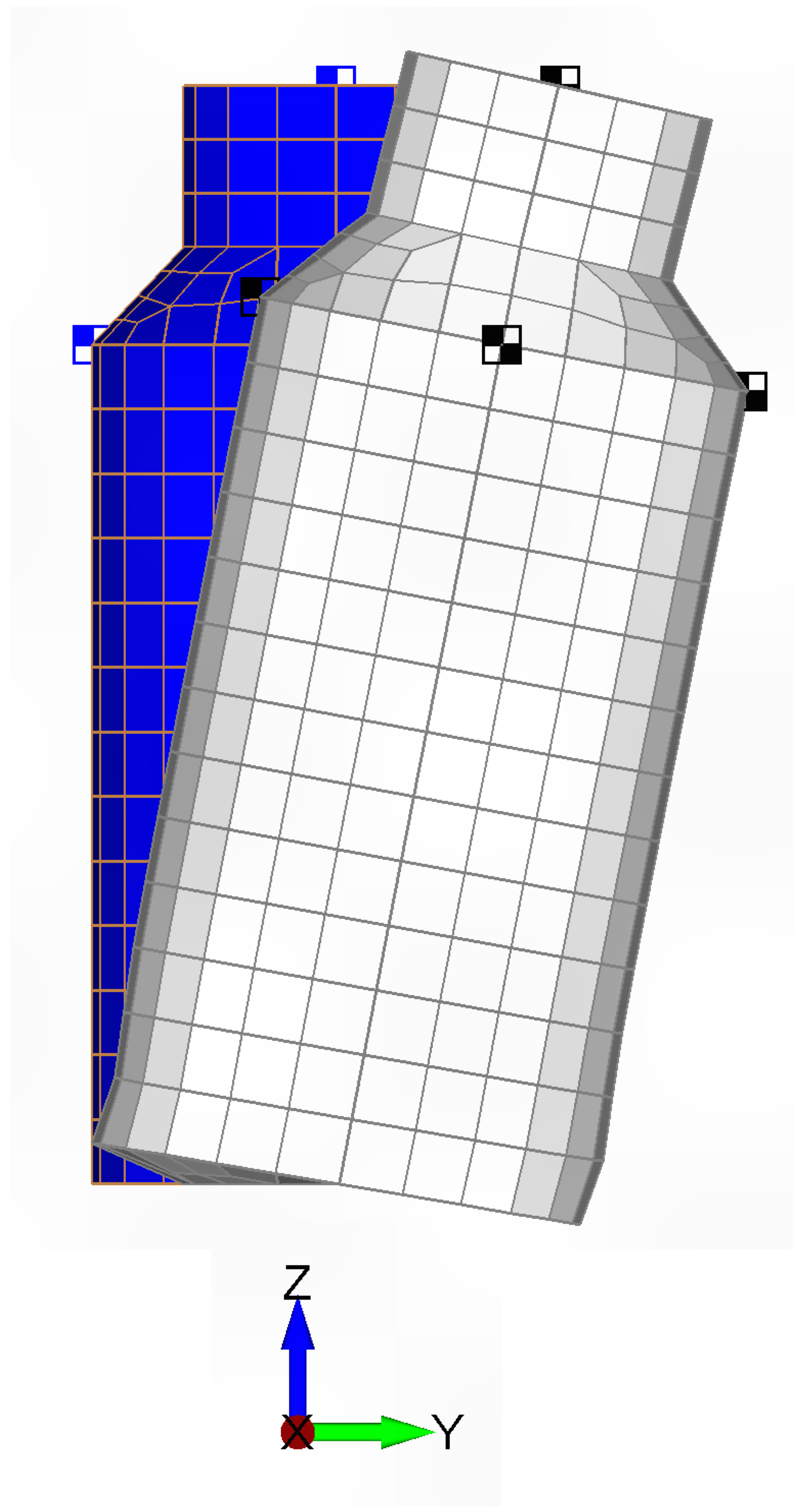
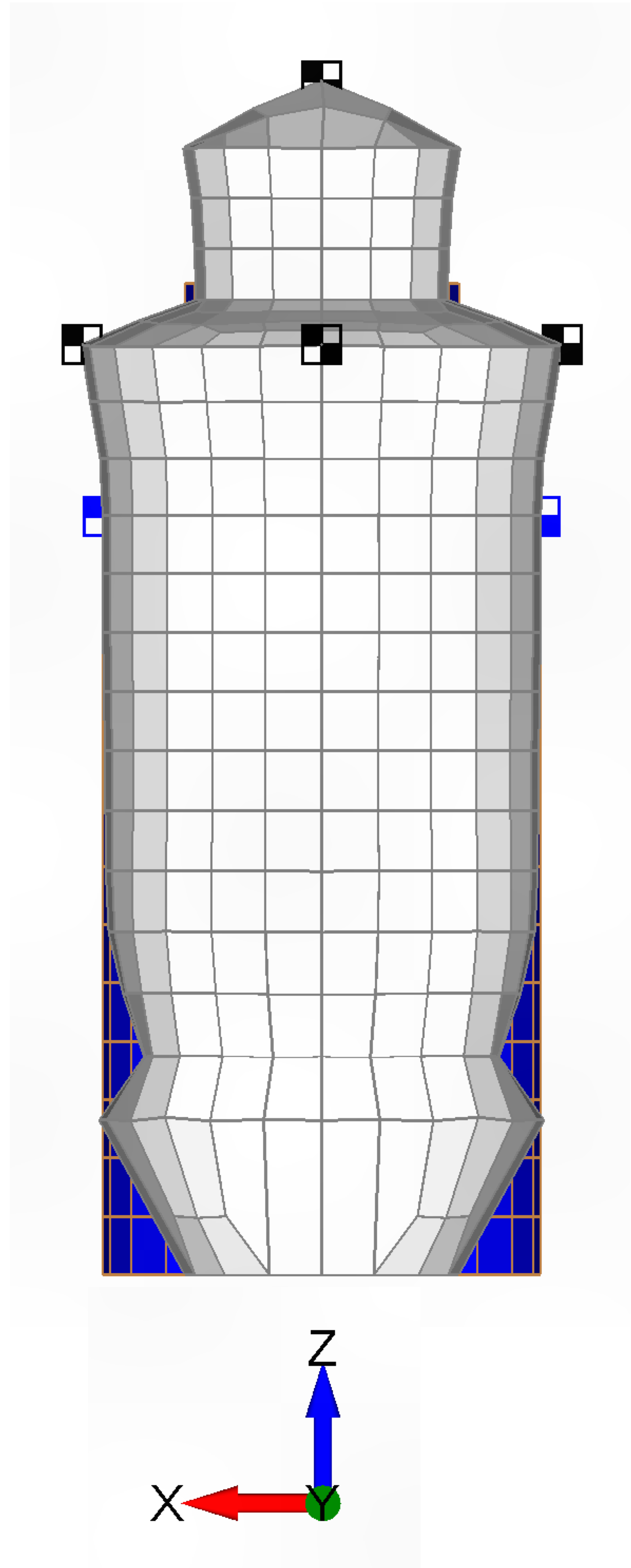
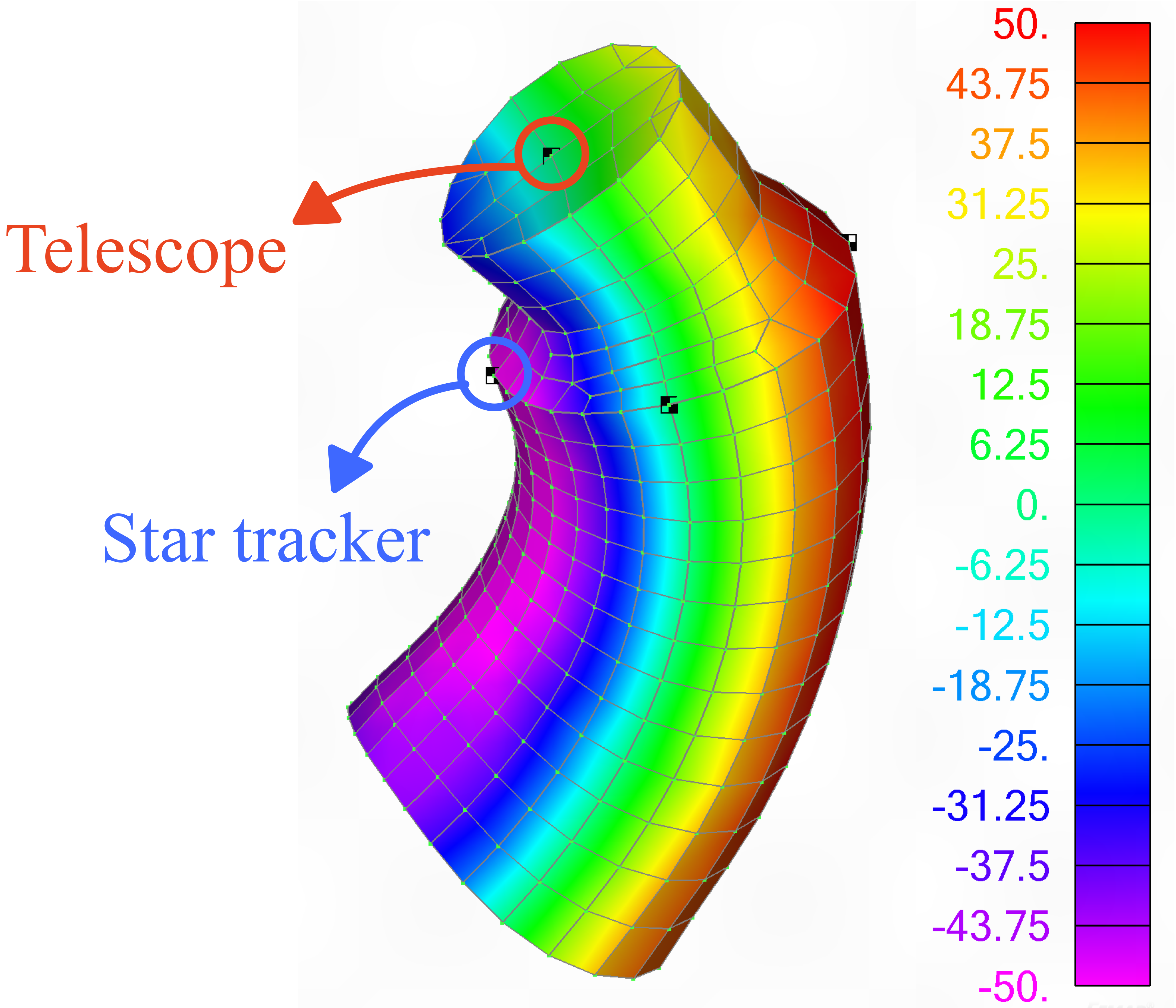
A thermal map was applied and thermoelastic deformation evaluated. A criticality was found: the relative bore-sight rotation between the telescope and star tracker (~0.17°) is too high for typical pointing requirements. Design changes (e.g. low-CTE composite materials) are recommended for the next iteration.
Sine Test Prediction
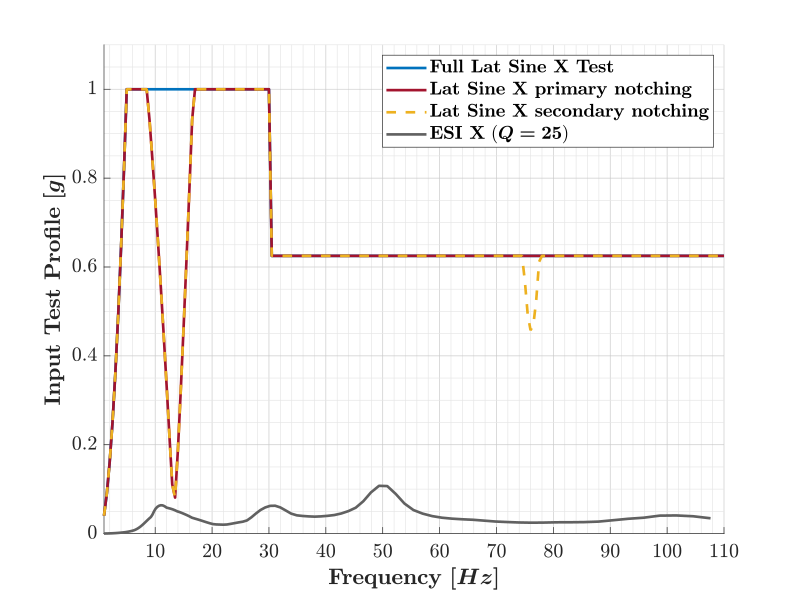
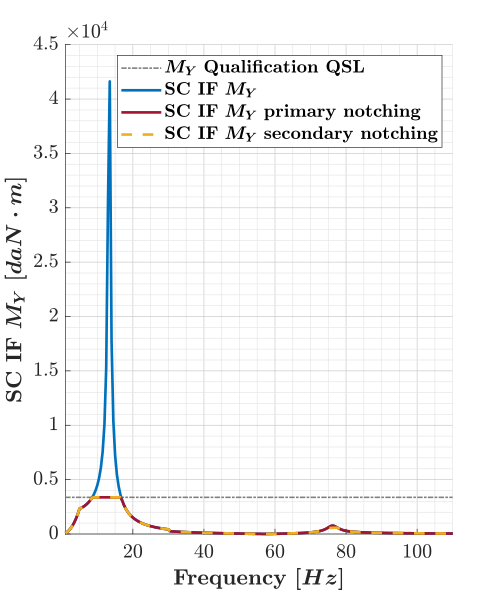
Sinusoidal vibration tests were simulated along three axes. Primary notching limited interface loads to qualification levels; secondary notching was needed in X and Y to protect the telescope (qualified up to 10 g lateral, 20 g longitudinal). The notched profiles remain above the Equivalent Sine Input threshold. Compliant.
Acoustic Test Prediction
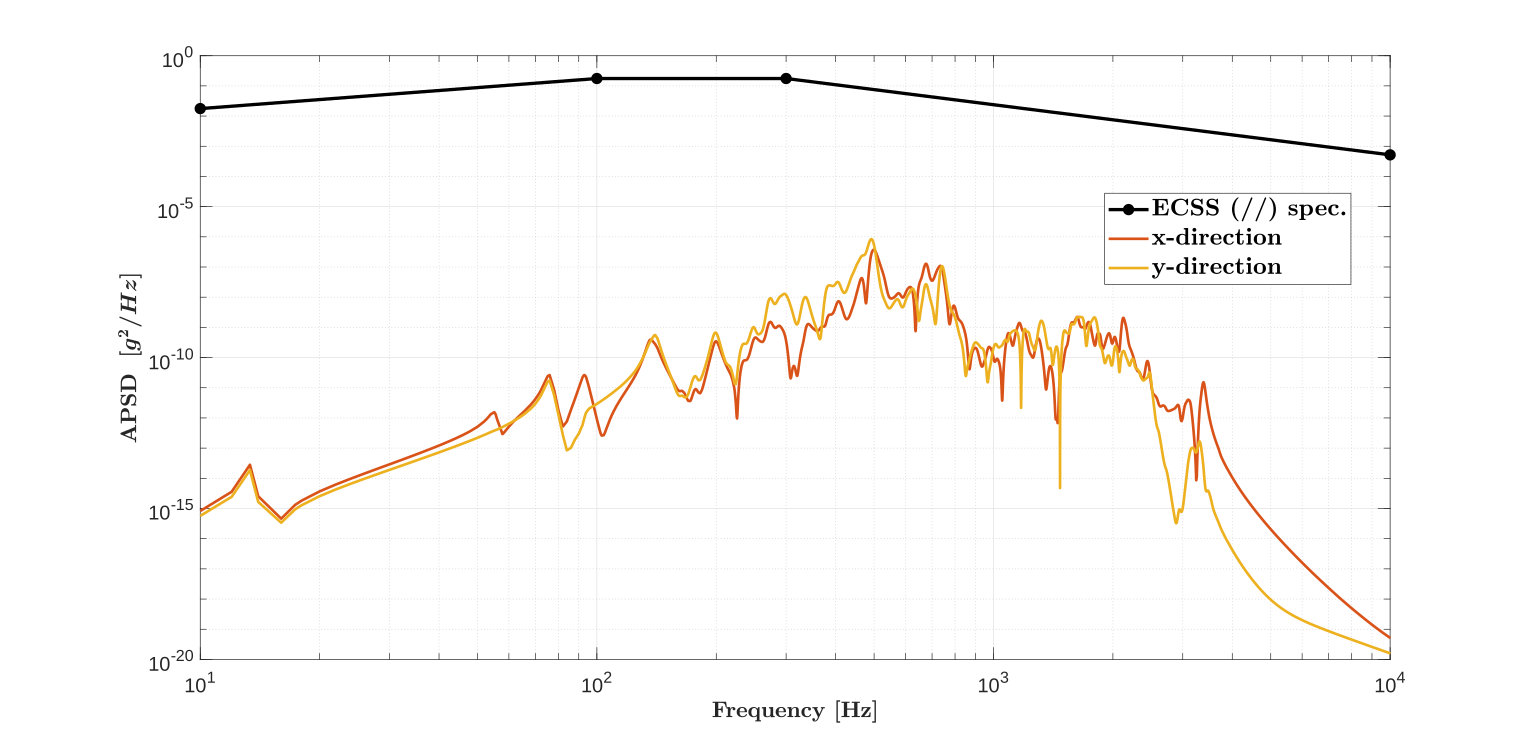
The spacecraft's random vibration response to the acoustic qualification environment was simulated. The predicted APSD for the telescope stays below ECSS qualification levels in both out-of-plane and in-plane directions. Compliant.
Severity Comparison
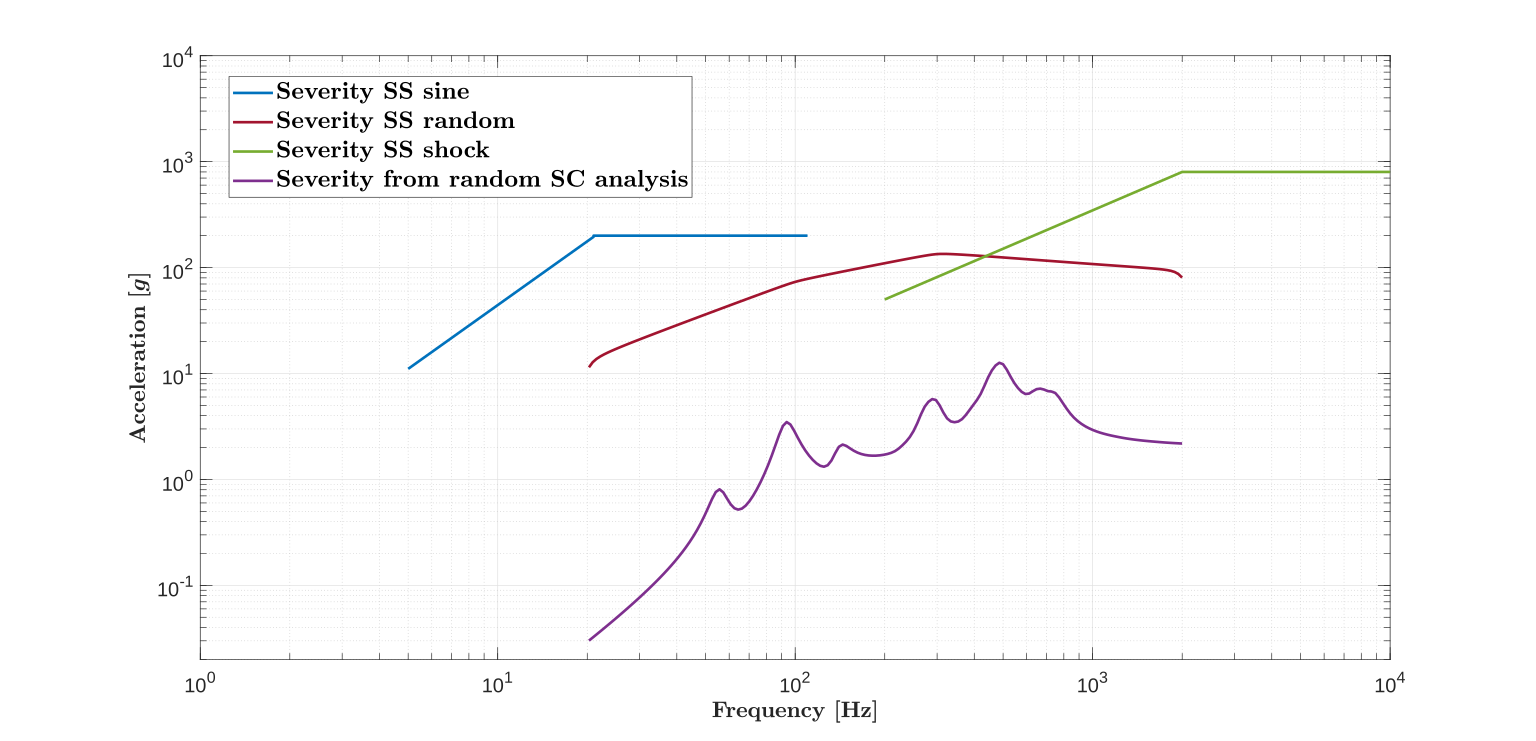
A unified comparison of sine, random, and shock severities confirmed the telescope is qualified across the entire 20–10,000 Hz band.
Buckling Analysis
Eigenvalue buckling analysis under all quasi-static load cases yielded a minimum eigenvalue of ~200 (3rd stage max acceleration), giving a margin of safety of ~199. The spacecraft is significantly oversized with respect to buckling.
What I Learned
Supervised by Pietro Nali, a Thales Alenia Space specialist in the design and dynamic testing of satellites, this project taught me the key concepts behind the main analyses performed during the design and development phases of a satellite. Beyond hands-on experience with industry-standard software such as Femap and MSC Nastran, it strengthened my teamwork and problem-solving skills, as we tackled complex, interdependent structural analyses under realistic constraints. I gained a deeper understanding of how structural compliance is assessed end-to-end, and learned to critically interpret results and propose design improvements when non-conformities arise.